The other day, I came across the below paper which is a very good summary of what we know about back pain in horses and the potential causes and symptoms (physical, emotional and behavioural). All too often behaviours which could be (or are) caused by pain are punished with very little thought given to potential physical causes and investigation. Even worse without the potential consideration of role of pain in behaviour, the horse doesn’t receive treatment and so continues to suffer. Ideally, as horse owners we should be educated in the basics of what to look out for and all back investigation and treatment would be done in collaboration with veterinary professionals. This is definitely a paper to read, may be on a raining evening over a cup of hot cocoa as it is a reasonable length. It is always good to remind ourselves of best practice around welfare!
Link to the full paper below the abstract
Detecting and Measuring Back Disorders in Nonverbal Individuals: The Example of Domestic Horses
Clémence Lesimple 1, 2,*, Carole Fureix 1 , Lydiane Aubé 1 , & Martine Hausberger 2 1Ethologie Animale et Humaine, Université de Rennes 2CNRS, Ethologie Animale et Humaine UMR Université de Rennes *Corresponding author
(Email: lesimple.c@gmail.com) Citation – Lesimple, C., Fureix, C., Aubé, L., & Hausberger, M. (2016). Detecting and measuring back disorders in nonverbal individuals: The example of domestic horses. Animal Behavior and Cognition, 3(3), 159–179. doi: 10.12966/abc.05.08.2016
Abstract – Back disorders are amongst the major health-related disorders associated to working conditions in our society. Horses share with humans the exposure to potential physically harmful working conditions leading to back disorders. However, despite their high prevalence, these problems are often unacknowledged in the horse industry, mostly because their diagnosis remains difficult, particularly in field conditions. In the present review, we review the current scientific knowledge on back vertebral, muscular and musculoskeletal disorders. We will first present the existing knowledge about their prevalence and the tools available for diagnosis. Then, the different potential sources of back pain, including anatomical implications, the effect of emotionality and working conditions will be discussed. We finally present the existing behavioral, postural and physiological indicators of back pain that could help an early detection of back disorders.
Keywords – Horse, Equine, Work, Illness, Back disorder assessment, Indicators
Often it is useful, potentially even necessary, to have more than one cue for a behaviour. For example, most horses need to know a voice and physical cue for the paces and to move back from a light touch to the chest and a voice command. Dogs will clue into the point and “off” signals that come soon after that pleasant, muddy romp on the two-legs furniture. Rats learn the screeching and frantic hand waving that prevents them chewing, or at least tries to. And cats train their two-leg servants to clean up after them through a combination of auditory retching cues and olfactory ones which trigger retching. Below my dog Jack performs the speak command to a voice and hand signals to demonstrate a behaviour which has been trained to multiple cues.
If you are training an animal, or are a particularly well-read cat training a human, it is useful to be able to teach more than one cue for a behaviour without confusing the trainee. There are several ways duel cuing or multi cuing can be achieved. You can:
Teach the cues separately
Duel cue
Add cues to an established behaviour
Teaching Two Cues Separately
Often people teach two or more cues for a behaviour separately. For example,when teaching a horse to trot whilst free schooling a visual cue or a voice signal is often used. However, during ridden work the horse will learn trot from a physical cue – a light touch with the rider’s legs. The desired end behaviour is always the same despite more than one type of cue. Separate, multiple cues can be taught to animals in this manner, the same way the horse is taught to trot from a voice command from the ground and a physical cue on board. Although, occasionally you may find that the cue-response establishment becomes dependent on the situation and that the cue may not transfer to other situations (a process know as generalisation). Lots of horse that free school very well will do the ear flick of confusion if verbally asked to trot whilst ridden. This can be overcome by introducing the cues in a range of environments so that they don’t become place or time specific.
Duel Cues
Most duel cues are taught almost accidentally by the cues appearing together during training. Animals, like humans, have implicit cognitive processes specifically designed to quickly identify patterns of events within environments, whether said patterns are circumstantial, correlatory or causal. The implicit mind is responsible for or has a hand in several human behaviours, including what we call ‘gut feeling’, stereotyping, superstitions and learning. For an animal, picking up on the pattern of the cues associated with the behaviour and reward will result in the animal registering both cues as being associated with reward when a certain behaviour is performed. Humans learn associations in much the same way, if you want someone to wash up more often, make sure something pleasant happens soon after and repeat until the washing up behaviour is established. The pleasant occurrence may include a beer or chocolate appearing in the hand of the trainee after the desired behaviour, or maybe just some affection if you are of a mind to be subtle in your human training, or of course, if you are a cat and limited in your reward options.
Back to non-human animal training. A common duel cue is the use of the word “off” and a physical pointing gesture to train an animal to move from an area. both cues are associated with the “off” behaviour being rewarded (assuming the correct training protocol is being used, even if the cream sofa now has muddy paw prints on it).
Duel cuing, thanks to the incredible quickness of animals ability to pick up patterns, is often a successful way to teach two cues for a behaviour. However, occasionally the animal can become stuck needing both cues to perform a behaviour or only learn one of the cues. To solve the animal needing both cues try fading one cue and making one more obvious whilst rewarding the response behaviour until the obvious cue alone will trigger the behaviour. Then reverse the process until both cues trigger the wanted behaviour. If your pet/trainee has only learnt one cue and not the other, the second cue can be taught separately or added as described below.
Adding Cues
As not all training can be planned in advance, sometimes extra cues need to be taught to the animal. It is possible to add additional cues to already established cue-response behaviour patterns. This is how we taught Jack to speak on command to both a voice signal and a hand one. When we first brought him home from the rescue all those years ago, I did a lot of training with him to help establish a relationship, to help him settle in and just for fun because he is a very smart and happy dog to work with. As part of our training Jack was taught to speak through association training, if he barked I said “speak” and rewarded verbally until me saying “speak” caused Jack to bark. There are other ways to teaching the “speak” command but this one is good fun and without pressure. If your dog is liable to be over enthusiastic with the barking you can also teach a silence command or train specifically for one bark.
Once the “speak” command was taught, I thought it would be fun to teach a hand movement to also cue a bark. I paired this cue with the voice command several times, rewarding the response, and then faded the voice command very gradually and emphasised the hand movement until both the hand movement alone and voice command alone would result in a bark from Jack. The same procedure can be employed to teach two cues for other behaviours.
*Note* Some people worry that teaching a bark command encourages off command barking, however, I have never found this to be the case unless the dog is confused about the cue. Certainly Jack is never a problem barker, although he will gently, but persistently, moan at you if you are writing a blog post at walk time.
I just found two really great reviews of my book on the American Amazon. They are quite old but I had somehow never seen them. A belated thank you to both reviewers, your comments are appreciated.
“5.0 out of 5 starsA Must Read For Every Horseman, Great Value, December 28, 2011
Knowing Your Horse: A Guide to Equine Learning, Training and Behaviour (Paperback)
My second favorite horsemanship book of all time. I’ve read many horsemanship books and this one beats all the others except for “Equitation Science” which I consider to be the very best. This book contains more important training knowledge than reading all of the books, watching all the dvds and attending all the clinics by Parelli, Clinton Anderson, Buck Brannaman, Gordon Wright, George Morris, Denny Emerson, John Lyons, Stacy Westfall, Cherry Hill and all the rest of that ilk. No ego tripping, bragging or marketing of “horse whispering” products either, just practical horsemanship solidly based upon the science of learning. Do yourself and especially your horses a big favor and study this book.”
“5.0 out of 5 starsBetter than Equitation Science, August 7, 2012
This review is from: Knowing Your Horse: A Guide to Equine Learning, Training and Behaviour (Paperback)
Knowing your horse outlines the fundamentals of learning theory as applied to horse training. This book provides correct definitions of learning theory and examples to help the reader grasp the concepts. There are training plans included to help people apply learning theory, as well as case studies and research reviews. Whilst I am also a huge fan of Equitation Science, Knowing Your Horse is much clearer and easier to read.”
 ss the below paper which is a very good summary of what we know about back pain in horses and the potential causes and symptoms (physical, emotional and behavioural). All too often behaviours which could be (or are) caused by pain are punished with very little thought given to potential physical causes and investigation. Even worse without the potential consideration of role of pain in behaviour, the horse doesn’t receive treatment and so continues to suffer. Ideally, as horse owners we should be educated in the basics of what to look out for and all back investigation and treatment would be done in collaboration with veterinary professionals. This is definitely a paper to read, may be on a raining evening over a cup of hot cocoa as it is a reasonable length. It is always good to remind ourselves of best practice around welfare!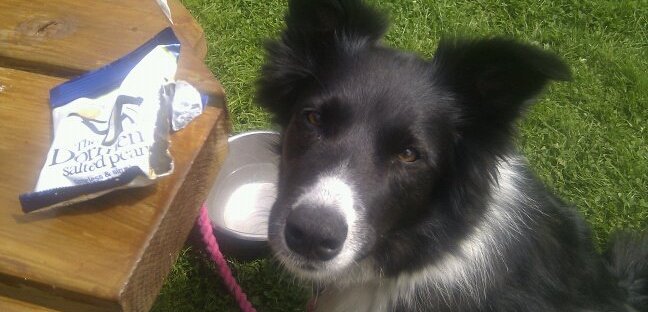


 Emma Lethbridge Horsemanship