A new study into separation anxiety in dogs has found several root causes of the disorder, including: “exit frustration,” “redirected reactive,” “reactive inhibited” and “boredom”.
Abstract -“Diagnoses are widely used in both human and veterinary medicine to describe the nature of a condition; by contrast, syndromes are collections of signs that consistently occur together to form a characteristic presentation. Treatment of syndromes, due to either their lack of a clear biological cause or multiple causes, necessarily remains non-specific. However, the discovery of interventions may help refine the definition of a syndrome into a diagnosis. Within the field of veterinary behavioral medicine, separation related problems (SRPs) provide a good example of a syndrome. We describe here a comprehensive process to develop a diagnostic framework (including quality control assessments), for disambiguating the signs of SRPs as an example of a heterogeneous behavioral syndrome in non-human animals requiring greater diagnostic and treatment precision. To do this we developed an online questionnaire (243 items) that covered the full spectrum of theoretical bases to the syndrome and undertook a large-scale survey of the presenting signs of dogs with one or more of the signs of SRPs (n = 2,757). Principal components analysis (n1 = 345), replicated in a second sample (n2 = 417; total n = 762), was used to define the structure of variation in behavioral presentation, while hierarchical agglomerative cluster analysis cross checked with the partitioned around medoids method was used to determine sub-populations. A total of 54 signs were of value in defining a latent structure consisting of seven principal components (termed “exit frustration,” “social panic,” “elimination,” “redirected frustration,” “reactive communication,” “immediate frustration,” “noise sensitivity”), which divided the population in four clusters (termed “exit frustration,” “redirected reactive,” “reactive inhibited” and “boredom” related SRPs) with 11 sub-clusters (3, 3, 3, and 2, respectively). We used a bottom-up data-driven approach with numerous quality checks for the definition of robust clusters to provide a robust methodology for nosological studies in veterinary behavioral medicine, that can extend our understanding of the nature of problems beyond SRPs. This provides a solid foundation for future work examining aetiological, and differential treatment outcomes, that will allow both more effective treatment and prevention programmes, based on a fully appreciation of the nature of the problem of concern.”
Science has confirmed that dogs can recognise facial expressions of emotion in situations devoid of other social cues to human emotion (e.g. body language and voice).
Often it is useful, potentially even necessary, to have more than one cue for a behaviour. For example, most horses need to know a voice and physical cue for the paces and to move back from a light touch to the chest and a voice command. Dogs will clue into the point and “off” signals that come soon after that pleasant, muddy romp on the two-legs furniture. Rats learn the screeching and frantic hand waving that prevents them chewing, or at least tries to. And cats train their two-leg servants to clean up after them through a combination of auditory retching cues and olfactory ones which trigger retching. Below my dog Jack performs the speak command to a voice and hand signals to demonstrate a behaviour which has been trained to multiple cues.
If you are training an animal, or are a particularly well-read cat training a human, it is useful to be able to teach more than one cue for a behaviour without confusing the trainee. There are several ways duel cuing or multi cuing can be achieved. You can:
Teach the cues separately
Duel cue
Add cues to an established behaviour
Teaching Two Cues Separately
Often people teach two or more cues for a behaviour separately. For example,when teaching a horse to trot whilst free schooling a visual cue or a voice signal is often used. However, during ridden work the horse will learn trot from a physical cue – a light touch with the rider’s legs. The desired end behaviour is always the same despite more than one type of cue. Separate, multiple cues can be taught to animals in this manner, the same way the horse is taught to trot from a voice command from the ground and a physical cue on board. Although, occasionally you may find that the cue-response establishment becomes dependent on the situation and that the cue may not transfer to other situations (a process know as generalisation). Lots of horse that free school very well will do the ear flick of confusion if verbally asked to trot whilst ridden. This can be overcome by introducing the cues in a range of environments so that they don’t become place or time specific.
Duel Cues
Most duel cues are taught almost accidentally by the cues appearing together during training. Animals, like humans, have implicit cognitive processes specifically designed to quickly identify patterns of events within environments, whether said patterns are circumstantial, correlatory or causal. The implicit mind is responsible for or has a hand in several human behaviours, including what we call ‘gut feeling’, stereotyping, superstitions and learning. For an animal, picking up on the pattern of the cues associated with the behaviour and reward will result in the animal registering both cues as being associated with reward when a certain behaviour is performed. Humans learn associations in much the same way, if you want someone to wash up more often, make sure something pleasant happens soon after and repeat until the washing up behaviour is established. The pleasant occurrence may include a beer or chocolate appearing in the hand of the trainee after the desired behaviour, or maybe just some affection if you are of a mind to be subtle in your human training, or of course, if you are a cat and limited in your reward options.
Back to non-human animal training. A common duel cue is the use of the word “off” and a physical pointing gesture to train an animal to move from an area. both cues are associated with the “off” behaviour being rewarded (assuming the correct training protocol is being used, even if the cream sofa now has muddy paw prints on it).
Duel cuing, thanks to the incredible quickness of animals ability to pick up patterns, is often a successful way to teach two cues for a behaviour. However, occasionally the animal can become stuck needing both cues to perform a behaviour or only learn one of the cues. To solve the animal needing both cues try fading one cue and making one more obvious whilst rewarding the response behaviour until the obvious cue alone will trigger the behaviour. Then reverse the process until both cues trigger the wanted behaviour. If your pet/trainee has only learnt one cue and not the other, the second cue can be taught separately or added as described below.
Adding Cues
As not all training can be planned in advance, sometimes extra cues need to be taught to the animal. It is possible to add additional cues to already established cue-response behaviour patterns. This is how we taught Jack to speak on command to both a voice signal and a hand one. When we first brought him home from the rescue all those years ago, I did a lot of training with him to help establish a relationship, to help him settle in and just for fun because he is a very smart and happy dog to work with. As part of our training Jack was taught to speak through association training, if he barked I said “speak” and rewarded verbally until me saying “speak” caused Jack to bark. There are other ways to teaching the “speak” command but this one is good fun and without pressure. If your dog is liable to be over enthusiastic with the barking you can also teach a silence command or train specifically for one bark.
Once the “speak” command was taught, I thought it would be fun to teach a hand movement to also cue a bark. I paired this cue with the voice command several times, rewarding the response, and then faded the voice command very gradually and emphasised the hand movement until both the hand movement alone and voice command alone would result in a bark from Jack. The same procedure can be employed to teach two cues for other behaviours.
*Note* Some people worry that teaching a bark command encourages off command barking, however, I have never found this to be the case unless the dog is confused about the cue. Certainly Jack is never a problem barker, although he will gently, but persistently, moan at you if you are writing a blog post at walk time.
Two recent discoveries were made regarding the date of domestication of the wolf and resulting canine characteristics.
The first paper explored the origins of the dog using methods that examined the genetics and relatedness of dogs and wolves. The authors, Freedman et al, have narrowed domestication of the dog to a period 11-16 thousand years ago. As this time period predates the development of agriculture, it is posited that the first dogs were domesticated alongside hunter-gatherers rather than emerging agriculturalists. Furthermore, it appears that dogs, regardless of geographical origin, are genetically related to each other more than modern wolf species, and that genetic similarities between domestic dogs breeds and extant wolf species may be due to continued interbreeding post-domestication. The original dogs which formed a relationship of symbiotic benefit with our hunter-gather ancestors appear to have descended from an ancient common ancestor of wolf which populated areas in which ancient humans’ dwelt. So it seems the common story of dog domestication is not as simple as once thought.
Below is the abstract –
“To identify genetic changes underlying dog domestication and reconstruct their early evolutionary history, we generated high-quality genome sequences from three gray wolves, one from each of the three putative centers of dog domestication, two basal dog lineages (Basenji and Dingo) and a golden jackal as an outgroup. Analysis of these sequences supports a demographic model in which dogs and wolves diverged through a dynamic process involving population bottlenecks in both lineages and post-divergence gene flow. In dogs, the domestication bottleneck involved at least a 16-fold reduction in population size, a much more severe bottleneck than estimated previously. A sharp bottleneck in wolves occurred soon after their divergence from dogs, implying that the pool of diversity from which dogs arose was substantially larger than represented by modern wolf populations. We narrow the plausible range for the date of initial dog domestication to an interval spanning 11–16 thousand years ago, predating the rise of agriculture. In light of this finding, we expand upon previous work regarding the increase in copy number of the amylase gene (AMY2B) in dogs, which is believed to have aided digestion of starch in agricultural refuse. We find standing variation for amylase copy number variation in wolves and little or no copy number increase in the Dingo and Husky lineages. In conjunction with the estimated timing of dog origins, these results provide additional support to archaeological finds, suggesting the earliest dogs arose alongside hunter-gathers rather than agriculturists. Regarding the geographic origin of dogs, we find that, surprisingly, none of the extant wolf lineages from putative domestication centers is more closely related to dogs, and, instead, the sampled wolves form a sister monophyletic clade. This result, in combination with dog-wolf admixture during the process of domestication, suggests that a re-evaluation of past hypotheses regarding dog origins is necessary.”
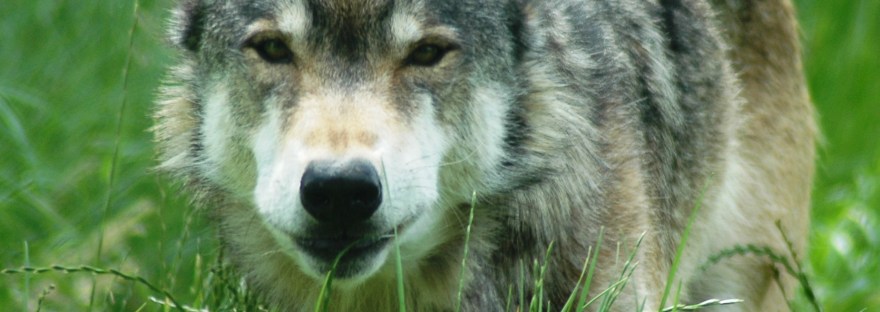
The second paper has found differences in the cognitive abilities of wolves and dogs. Perhaps not surprisingly, given the long history of environmental separation and complex genetic relationship between dogs and wolves, researchers have found that the species differ in their ability to mimic one another, with wolves out performing dogs in their ability to learn how to solve a puzzle by copying a conspecific.
“Domestication is thought to have influenced the cognitive abilities of dogs underlying their communication with humans, but little is known about its effect on their interactions with conspecifics. Since domestication hypotheses offer limited predictions in regard to wolf-wolf compared to dog-dog interactions, we extend the cooperative breeding hypothesis suggesting that the dependency of wolves on close cooperation with conspecifics, including breeding but also territory defense and hunting, has created selection pressures on motivational and cognitive processes enhancing their propensity to pay close attention to conspecifics’ actions. During domestication, dogs’ dependency on conspecifics has been relaxed, leading to reduced motivational and cognitive abilities to interact with conspecifics. Here we show that 6-month-old wolves outperform same aged dogs in a two-action-imitation task following a conspecific demonstration. While the wolves readily opened the apparatus after a demonstration, the dogs failed to solve the problem. This difference could not be explained by differential motivation, better physical insight of wolves, differential developmental pathways of wolves and dogs or a higher dependency of dogs from humans. Our results are best explained by the hypothesis that higher cooperativeness may come together with a higher propensity to pay close attention to detailed actions of others and offer an alternative perspective to domestication by emphasizing the cooperativeness of wolves as a potential source of dog-human cooperation.”




 Emma Lethbridge Horsemanship